904-530-6010
The County Insider
  • Home
  • About
  • Sign Up for Emails

Nassau County, Florida

Welcome to beautiful Nassau County, located in the northeast corner of Florida along the Atlantic Ocean and Interstate 95. We are proud to serve as the Eastern Gateway to the Sunshine State. From our historic island, sandy beaches, and championship golf courses to our scenic rivers, green pastures, and majestic timberlands, we truly offer something for everyone.

Beach Bonfire Regulations

11/3/2025

0 Comments

 
Picture
11/3/25 @ 7:00 p.m.

​In Nassau County, Florida, beach bonfires are a cherished tradition that bring friends and families together under the stars, providing the perfect backdrop for roasting marshmallows, sharing stories, or simply enjoying the ocean breeze. While these gatherings are a fun way to connect with nature and each other, it’s important to remember that beach bonfires must be conducted safely and responsibly. Proper regulations protect not only the natural environment such but also the safety of residents and visitors. 

Now that sea turtle nesting season has ended, we want to take this opportunity to remind everyone of the rules for beach fires in Nassau County.

Ordinance No. 2025-037, Section 23 1/2-14, regulates fires on County beaches (from Peters Point south to the State Park):
  1. No fires are permitted between May 1 – October 31 (Sea Turtle Nesting Season).
  2. Fires outside of nesting season must follow these guidelines:
    • No fires are allowed in the dunes
    • The use of wood containing nails, staples, rivets, fasteners, straps, or similar items is prohibited
    • Fires must be fully extinguished, and the fire area must be covered before leaving.
  3. Violations of these rules may result in:
    • An order to leave the beach
    • If the violator refuses, they may be considered a trespasser and subject to a second-degree misdemeanor, punishable by a $500 fine and/or 60 days in jai
    • Vehicles may be towed at the owner/operator’s expense, including impoundment fees.
​
Thank you for keeping these regulations in mind and helping protect Nassau County’s beaches, wildlife, and the safety of everyone who enjoys them. Together, we can ensure our coastal traditions remain safe and sustainable for generations to come.

-Sabrina Robertson
 Communications Officer

0 Comments

2025 Sea Turtle Nesting Season Summary

11/3/2025

0 Comments

 
Picture
11/4/25 @ 10:00 a.m. 

For our final Turtle Talk Tuesday of the year, we checked in with our amazing partners at Amelia Island Sea Turtle Watch (AISTW) for a look back at the 2025 nesting season. Here’s what longtime volunteers Bill and Ronda Bokram shared:

“Every year, people ask us how the season’s going—and at the end, if it was a good one! This year, residents near Main Beach and Sadler noticed fewer nests, while those at Summer Beach saw plenty and thought it was a great season. Both are right!”

Here’s the breakdown for AISTW’s 11.6 miles of monitored beach between the state parks:

Total nests: 144 (lower than the 10-year average of 200)
Loggerhead nests: 127 — the lowest in over a decade, but consistent with statewide trends
Green turtle nests: 16 — matching the record from 2023
Leatherback nests: 1 — the second in two years, which is rare and exciting!

And while nest numbers fluctuate, that’s completely normal. Sea turtles don’t nest every year and can skip two or more seasons depending on food supply and environmental conditions.

The big win: Over 11,225 hatchlings made their way to the sea this year.  This is an incredible success story for conservation!

Island-wide totals for 2025:
  • AISTW beaches: 144 nests
  • Amelia Island State Park: 3 nests
  • ​Fort Clinch State Park: 25 nests
​Grand total: 172 nests across Amelia Island

A huge thank-you to our partners at Amelia Island Sea Turtle Watch and to everyone who helped protect these incredible creatures throughout the season. 

-Sabrina Robertson
 Communications Officer

0 Comments

Turtle Talk Tuesday

10/28/2025

0 Comments

 
Picture
10/28/25 @ 2:00 p.m. 
​
As sea turtle nesting season comes to a close, we want to thank our residents, visitors, and beachgoers for doing their part to protect these amazing creatures.

Your efforts, turning off beachfront lights, keeping beaches clean, filling in holes, and removing obstacles, help ensure that hatchlings make it safely to the ocean.

We also hope everyone enjoyed our weekly Turtle Talk Tuesday posts this season! It’s been wonderful sharing fun facts, nesting updates, and tips on how we can all make a difference.

With nesting season ending on October 31st, normal beach lighting rules resume November 1st, but we encourage everyone to continue being mindful of our coastal wildlife year-round.

Thank you for helping keep Nassau County’s beaches safe for sea turtles! 

-Sabrina Robertson
​ Communications Officer

0 Comments

Turtle Talk Tuesday: Make a Loggerhead Turtle

10/21/2025

0 Comments

 
Picture
10/21/25 @ 9:00 a.m.

​As we get close to wrapping up another sea turtle nesting season, we wanted to share this fun activity you can do at home with your children. This 
Make a Loggerhead Turtle activity sheet is easy to follow and all you need is a white paper plate, scissors, a pencil, a short piece of string, black waterproof koki-pen, rules and green and brown paint. Once finished, you can use it as a wall decoration, a hat, or make several to string together for a mobile. Enjoy!

-Sabrina Robertson
 Communications Officer


0 Comments

Turtle Talk Tuesday: Sea Turtle Life Cycle

10/14/2025

0 Comments

 
Picture
10/14/25 @ 9:00 a.m.

​It's Turtle Talk Tuesday and sea turtle nesting season is coming to end very soon (October 31st). After spending all summer talking about the types of sea turtles, which ones nest on Amelia Island, and other facts related to nesting and hatching, today we want to talk about the sea turtle's life cycle. 

The life of a sea turtle starts when a nesting female lays its eggs. About 6-8 weeks later, tiny hatchlings make their way to the surface of the sand and heads toward the water. But what happens then? 

As young turtles, very little is known about where they go after they reach the ocean. This period used to be known as "the lost years". However over the past few decades, researchers have pieced together information from ship observations, the pattern of sea currents and other data. Researchers have also studied isotopes from turtle tissue to analyze their diet and past locations. This information seems to indicate that hatchlings head out to sea to avoid predators. Once off the continental shelf, the growing turtle ends up in a current (known as the North Atlantic subtropic), and within a few years, they return to their birthplace. Once the turtle is fully grown, they will return to the place where they were born to mate. Once she lays her eggs on the nesting beach, the cycle starts again. 

Want to learn more? Visit www.seeturtles.org/sea-turtle-life-cycle. 

-Sabrina Robertson
 Communications Officer

0 Comments

Turtle Talk Tuesday: Distance Learning by the Sea Turtle Conservancy

10/7/2025

0 Comments

 
PicturePhoto credits: Sea Turtle Conservancy - Photo of student participating in virtual program about sea turtles.
10/7/25 @ 11:00 a.m. 

It's Turtle Talk Tuesday! Did you know that the Sea Turtle Conservancy (STC) is providing teachers with resources that will increase awareness about sea turtles and marine conservation? 

InterACT with Sea Turtles: Distance Learning for K-12 takes a fun, interactive approach to sea turtle education—using virtual collaboration to connect students directly with experts and multimedia resources. The goal is to inspire informed, proactive youth who support sea turtle conservation and become environmental stewards.

Educators can access free online resources, virtual presentations, and comprehensive lesson plans designed to make marine education both engaging and accessible. By removing geographic barriers, STC hopes to reach more students than ever before with hands-on learning about sea turtles and the environment.

Learn more and download lesson plans for each program at: https://conserveturtles.org/program-activity/distance-learning/

0 Comments

Turtle Talk Tuesday: Sea Turtle Conservancy

9/23/2025

0 Comments

 
Picture
9/23/24 @ 6:00 a.m. - Happy Turtle Talk Tuesday!

​The Sea Turtle Conservancy is the world's oldest conservation, advocacy, research and education center. Established in 1959 b Dr. Archie Carr, this international nonprofit organization was created to save sea turtles from imminent extinction through rigorous science-based conservation. Headquartered in Florida, the organization carries out worldwide programs to conserve and recover sea turtle populations.

The Sea Turtle Conservancy recently released a new video explaining who they are and why sea turtle conservation is so important. By raising awareness and inspiring action, the Conservancy continues to ensure that future generations can witness these incredible creatures thriving in our oceans. 

​To watch the video, please click here. 


-Sabrina Robertson
 Communications Officer

0 Comments

Turtle Talk Tuesday: Tour de Turtles Virtual Run Benefitting the Sea Turtle Conservancy

9/16/2025

0 Comments

 
Picture
9/16/25 @ 6:00 a.m.

For this week's Turtle Talk Tuesday, we wanted to share information on the Sea Turtle Conservancy's 
4th Annual 5K/10K Virtual Run. 

From the Sea Conservancy's webpage:

Join our sea turtles at the Tour de Turtles finish line by participating in Sea Turtle Conservancy’s 6th Annual 5K/10K Virtual Race! That’s right, you can join us virtually! 

This summer, STC released 22 satellite-tagged sea turtles as part of our annual Tour de Turtles migration marathon. Why? Because sea turtles don’t spend all their time at the nesting beach—they travel hundreds of miles, independently, through the world’s oceans!

To adequately protect sea turtles in all their habitats, we must learn more about their migratory patterns, their behavior at sea, where their marine habitats are located, how turtles use these different habitats, and the migration routes turtles travel between habitats.

This year’s tracked turtles have already swum more than 50,000 km collectively and are nearing the halfway point of their own virtual migration marathon, with the Tour de Turtles officially ending on November 1. What better way to celebrate their amazing journey than by hosting our own virtual race!
​
During our virtual race, we’re keeping in touch with participants electronically! Visit @conserveturtles on Facebook, Instagram and TikTok to share photos/videos of yourself, your team, and your actions to support sea turtles during your run or walk. Just tag us in your photos and use #TourdeTurtlesRace2025. We will also announce special contests and prizes just for event participants as we get closer to the event dates.

To register online, please click here. 

-Sabrina Robertson
 Communications Officer


0 Comments

Turtle Talk Tuesday: Sea Turtle Calendar Contest

9/9/2025

0 Comments

 
Picture
9/9/25 @ 6:00 a.m.

​Calling all photographers! The Sea Turtle Conservancy is hosting a calendar contest and is seeking stunning sea turtle photos. Submit up to 3 photos and a permission form to [email protected] by September 26th.The image must show the turtle in is natural setting and follow turtle-friendly guidelines. Learn more here. 

The Sea Turtle Conservancy is a non-profit organization that has been working to protect sea turtles nationally for the past 60 years. Learn more at conserveturtles.org. 

-Sabrina Robertson
​ Communications Officer

0 Comments

Turtle Talk Tuesday: Boat Strikes

9/2/2025

0 Comments

 
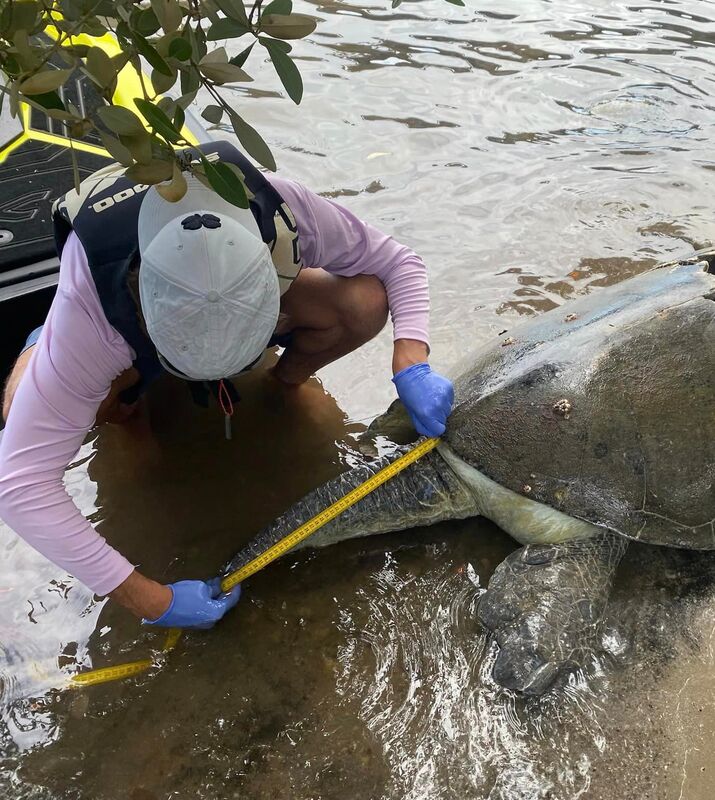
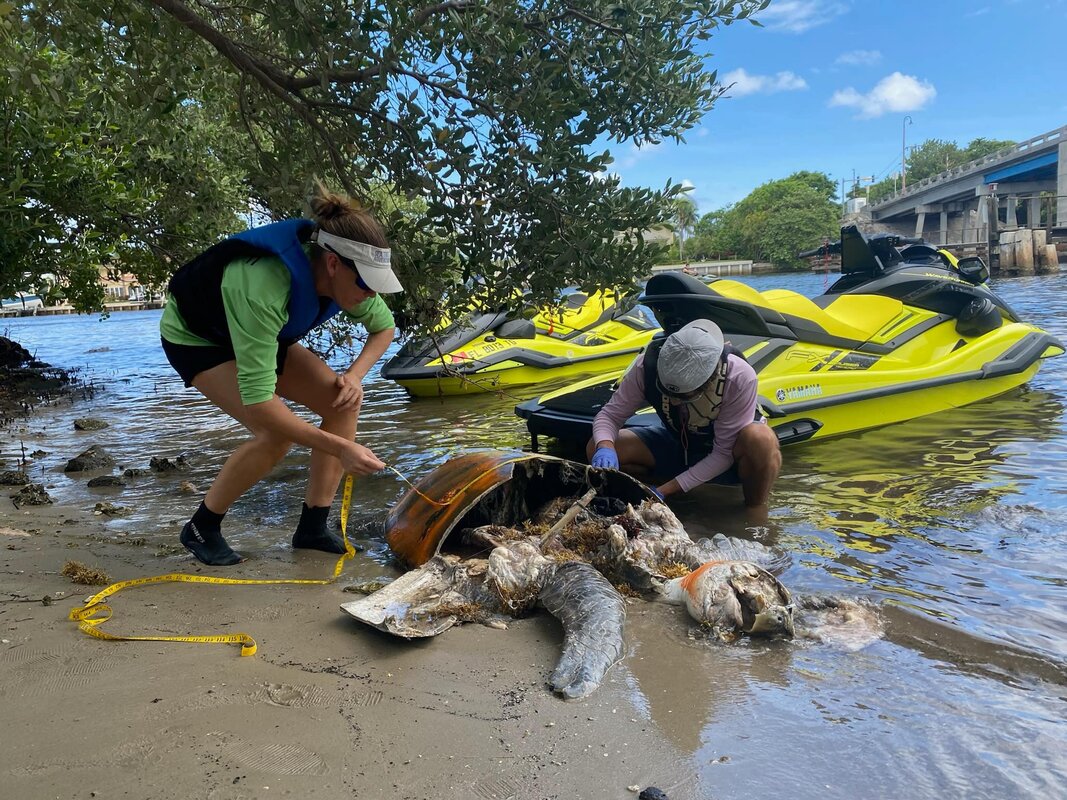
PictureThe Inwater Research Group shared a photo of a loggerhead sea turtle that had been struck by a vessel. The sea turtle was taken to the Loggerhead Marine Life Center in Juno beach where a team has been administering treatment and monitoring health until it makes a full recovery.
9/2/25 @ 9:30 a.m. - For this week's Turtle Talk Tuesday, we wanted to take a minute to discuss boat strikes and the significant threats to sea turtles and other marine animals. The Inwater Research Group recently shared the below photo after encountering two loggerhead sea turtles that had been struck by boats. 

According to the Sea Turtle Conservancy, sea turtles have poor hearing and vision when out of the water, making them vulnerable to vessel strikes when rising to the surface to breathe, bask in the sun, or feed in shallow areas. Many sea turtles are injured or killed by blunt-force trauma caused by boat impacts or propellers.

Boaters can reduce risks by following safe boating practices. 
  • Slow down in designated turtle zones and keep an eye out for surfacing turtles, particularly in seagrass beds and coral reefs where sea turtles like to feed
  • Use propeller guards to reduce changes of fatal strikes
  • Stay alert. Be aware of changes in the surface of the water. For example, swirls can indicate a loggerhead or manatee is nearby. 
  • Take extra caution during summer months as sea turtles are extremely active in waters during nesting season
  • Call for help. Boaters who hit a sea turtle or manatee should call the FWC at 1-888-404-3922. Boaters are not charged if the collision was an accident and they are operating the boat responsibly. 

​By working together and practicing safe boating habits, we can greatly reduce the number of preventable injuries to these incredible creatures. Every small action—whether it’s slowing down, staying alert, or reporting an accident—helps protect sea turtles and ensures that future generations will continue to enjoy their presence in our waters. Thank you for doing your part to keep our oceans safe.

-Sabrina Robertson
 Communications Officer


0 Comments

Importance of Sea Turtles

8/26/2025

0 Comments

 
PictureHawksbill Sea Turtle feeding on soft corals
8/26/25 @ 9:00 a.m. - It's Turtle Talk Tuesday!

Did you know that sea turtles are an important part of the environment? Sea Turtles are considered a "keystone species", which means if they are removed from a habitat, its natural order can be disrupted, affecting both wildlife and fauna in different ways. 

Five Reasons Why Sea Turtles Are Really Important (according to See Turtles, a non-profit foundation dedicated to protecting endangered sea turtles worldwide).
  1. Turtles help control their prey.  For example, a hawksbill turtle helps reefs by eating sponges that compete with them for space. Also, leatherbacks help manage the amount of jellyfish in the ocean. 
  2. Turtle nesting helps beaches.  Nutrients left behind by eggs and hatchlings that don't survive are an important source of coastal vegetation. 
  3. Hatchlings are an important source of food. Many animals such as birds, fish and mammals like raccoons rely on hatchlings to survive during nesting season. 
  4. They are important for coastal economies and native communities. Many communities rely on turtle watching or diving for jobs and income. Plus, there are emotional and psychological benefits to seeing a sea turtle in the wild. 
  5. Green turtles grazing on seagrass is important. Healthy seagrass benefits many species and store carbons for healthy seagrass beds. 
​
​To learn more, visit See Turtle's website. 

-Sabrina Robertson
 Communications Officer

0 Comments

Turtle Talk Tuesday

8/19/2025

0 Comments

 
8/19/25 @ 6:00 a.m. - It's Turtle Talk Tuesday. This week, we have an exciting midseason update from our partners at the Amelia Island Sea Turtle Watch. 

From Mary Duffy - Executive Director of AISTW

The end of August usually brings with it the end of sea turtle nesting season in NE Florida.  At this point in the season, AISW has documented 143 nests on the portion of the island between Ft. Clinch State Park and Amelia Island State Park. Of the 143 nests, 1 was a leatherback and 15 were green turtle nests.  That leaves 127 loggerhead nests, which is a lower number than previous years.  2025 is proving to be a low nesting year for loggerheads across the state.  Next season should prove to be a better year for them since they nest in 2-3 year intervals.

Our only leatherback this season required relocation due to the beach renourishment project.  Finding the eggs of a leatherback nest is no easy task.  A village of permitted volunteers were needed to find the eggs for relocation. After 75 days of incubation, the leatherback nest emerged.  It was a healthy emergence.  Upon excavation 3 days later, it was found to have had a very successful hatch and emergence rate.  Out of 120 viable eggs, 108 emerged successfully on their own and 12 were infertile. The only other contents in the nest were shards and varying sized “spacer eggs”.  Spacer eggs are calcium deposits which create pockets of air in the nest cavity of leatherbacks. These pockets of air are necessary for proper and complete gas exchange to insure development of hatchlings in the egg.

Of the 15 green turtle nests, 4 have successfully emerged.  Green turtles can successfully continue nesting into late August and even September.  Our last green turtle nest was August 10.  It is entirely possible for another green turtle nest on Amelia Island.  If not, our last nest is expected to emerge in October. 

Our regular volunteers will continue to monitor the beach through August 31.  Permitted volunteers will continue to monitor until the final nest emerges.  FWC reports will finish out the season in November, and then preparations will begin for the 2026 season.  

We extend our heartfelt thanks to the Amelia Island Sea Turtle Watch for their unwavering dedication to protecting sea turtles and preserving the natural beauty of our coastline. Their tireless efforts, community engagement, and commitment to conservation make a lasting difference, not only for these majestic creatures but for future generations who will enjoy and learn from your work. 

-Sabrina Robertson
 Communications Officer

0 Comments

New Beach Access Regulations Effective Monday, August 18, 2025

8/13/2025

0 Comments

 
8/13/25 @ 7:00 p.m. - The Board of County Commissioners (BOCC) understands and values the community’s long-standing tradition of beach use and the importance it holds for residents and visitors alike. The BOCC also recognizes that your beaches are home to fragile ecosystems and endangered species that depend on this environment for survival.

As stewards of our natural resources, Nassau County has a responsibility to safeguard these areas so they can be enjoyed by future generations. This means making thoughtful adjustments to beach use that both preserve cherished recreational opportunities and ensure we are protecting nesting wildlife, dune systems, and other sensitive habitats.

To ensure consistency with Federal law and in further protection of the endangered species on the Atlantic Ocean Beaches under the jurisdiction of Nassau County, the BOCC held a public hearing on Monday, August 11, 2025, adopting a new Nassau County Protected Species Management Plan. This plan includes modifying beach access hours for motorized vehicles and horses during sea turtle nesting season. The permitted hours for access from May 1 – October 31 (sea turtle nesting season) are now 7:30 a.m. – 7:30 p.m. From November 1 to April 30, the hours of access are 7:00 a.m. – 9:00 p.m.

Additionally, new signage will be in place to mark a Conservation Zone, 10-feet seaward from the permanent line of native vegetation, demarking the dune system. This zone prevents any access and parking is prohibited. There will also be additional conspicuous signage marking identified sea turtle nests to create an additional 10-foot buffer. Finally, a rut removal program will be implemented in coordination with the Amelia Island Sea Turtle Watch, as required.

Beginning Monday, August 18th the Vehicular Beach Access Ramps will enforce the newly adopted hours of access for motor vehicles and horses, beginning at 7:30 am and closing at 7:30 pm.

The BOCC’s goal is to work collaboratively with our environmental partners to maintain beach access in ways that are environmentally responsible, sustainable, and compatible with the needs of the species that share our shoreline. We thank the public for their understanding and cooperation as we work together to protect both our traditions and our environment.

-Sabrina Robertson
 Communications Officer
Picture
0 Comments

Turtle Talk Tuesday: Genetics Research

8/12/2025

0 Comments

 
Picture
8/12/25 @ 2:00 p.m. - It's Turtle Talk Tuesday! Did you know that sea turtle shells contain DNA that offers scientists a simple and powerful way of tracking the health and whereabouts of endangered sea turtles? This is a key step in sea turtle conservation. 

On Amelia Island, the Amelia Island Sea Turtle Watch is in its 10th consecutive year of participating in the loggerhead DNA Project conducted by the University of Georgia. By collecting the top egg in a loggerhead nest, the University of Georgia can analyze each for the Mother's DNA. 


This data provides us with information on: 
  • The type of sea turtle that nested
  • How many nests each female lays in a year
  • Whether the turtle is visiting more than one beach
  • How close together or far apart each individual turtle lays her nests, both within the same summer and from year-to-year
  • The number of turtles nesting in more than one state
  • How often each turtle nests 
  • How precisely a daughter returns to the beach where she hatched to lay her own eggs.

The DNA identifies each mother turtle, and from these results, UGA can determine if, where, and when a particular female has nested on Amelia Island or other participating beaches (North Florida, Georgia, South Carolina and North Carolina). 

The Amelia Island Sea Turtle Watch shares the results as they become available and publishes them on their webpage. This ongoing research not only deepens our understanding of sea turtle behavior but also provides vital data that helps guide conservation strategies, ensuring the protection and survival of these endangered species for generations to come.​

-Sabrina Robertson
 Communications Officer

0 Comments

Turtle Talk Tuesday: Temperature Dependent Sex Determination

8/5/2025

0 Comments

 
Picture
It's Turtle Talk Tuesday!

Did you know that the temperature of a sea turtle’s developing eggs determines whether or not the offspring will be male or female? In most species, gender is determined during the fertilization process, however the sex of most turtles, alligators and crocodiles is determined after fertilization. This is called temperature-dependent sex determination.

Research shows that if it turtles eggs incubate below 81.86°F, the hatchling will be male. If the eggs incubate above 88.8°F, the offspring will be female. Temperatures that fall somewhere between will produce a mix of male and female, baby turtles.

To learn more, visit NOAA's website. 

-Sabrina Robertson
 Communications Officer
0 Comments
<<Previous

    Categories

    All
    2020-census
    Affordable Housing
    American Beach
    American-rescue-plan
    Animal Control
    Around The County
    Beaches
    Bicentennial
    Bike Trails
    Board Vacancies
    Budget
    Building Department
    Cares
    Citizen Surveys
    City Of Fernandina Beach
    Clerk Of Courts
    Code-enforcement
    Community Outreac
    Contracts Procurement
    Contractsprocurement
    County-attorney
    County Awards
    County Extensionagriculture Services
    County Manager
    County Oversight
    County-oversight
    Economic Development
    Emergency Mgmt
    Employee Achievements
    Engineering Services
    Environment
    Facilities
    Fdot
    Financial
    Fire Rescue
    Flags
    Grant Info
    Growth-management
    Health Department
    Historic Preservation
    Job-growth
    Job Opportunities
    Land Conservation
    Land-conservation
    Library
    Nassau Amelia Utilities
    Nassau-prosperity-alliance
    Nassau Vision 2050
    Newsletters
    Not For Profits
    Planning
    Press Releasesadvisoriesc25c8208e5
    Proclamations
    Property Appraiser
    Public Information Office
    Public Works
    Railroad
    Recreation
    Recycling
    Resolutions
    School Board
    Senior Citizens
    Sheriff
    Solid Waste
    Special Events
    State Of Florida
    Stormwater Drainage
    Strategic Advancement
    Supervisor Of Elections
    Tax Collector
    Technical Services
    Tourism
    Transit Needs
    Tree Ordinance
    Veterans
    Video Projects
    Volunteer Opportunities
    Weather
    Week In Photos
    Wildlife

    Archives

    December 2025
    November 2025
    October 2025
    September 2025
    August 2025
    July 2025
    June 2025
    May 2025
    April 2025
    March 2025
    February 2025
    January 2025
    December 2024
    November 2024
    October 2024
    September 2024
    August 2024
    July 2024
    June 2024
    May 2024
    April 2024
    March 2024
    February 2024
    January 2024
    December 2023
    November 2023
    October 2023
    September 2023
    August 2023
    July 2023
    June 2023
    May 2023
    April 2023
    March 2023
    February 2023
    January 2023
    December 2022
    November 2022
    October 2022
    September 2022
    August 2022
    July 2022
    June 2022
    May 2022
    April 2022
    March 2022
    February 2022
    January 2022
    December 2021
    November 2021
    October 2021
    September 2021
    August 2021
    July 2021
    June 2021
    May 2021
    April 2021
    March 2021
    February 2021
    January 2021
    December 2020
    November 2020
    October 2020
    September 2020
    August 2020
    July 2020
    June 2020
    May 2020
    April 2020
    March 2020
    February 2020
    January 2020
    December 2019
    November 2019
    October 2019
    September 2019
    August 2019
    July 2019
    June 2019
    May 2019
    April 2019
    March 2019
    February 2019
    January 2019
    December 2018
    November 2018
    October 2018
    September 2018
    August 2018
    July 2018
    June 2018
    May 2018
    April 2018
    March 2018
    February 2018
    January 2018
    December 2017
    November 2017
    October 2017
    September 2017
    August 2017
    July 2017
    June 2017
    May 2017
    April 2017
    March 2017
    February 2017
    January 2017
    December 2016
    November 2016
    October 2016
    September 2016
    August 2016
    July 2016
    June 2016
    May 2016
    April 2016
    March 2016
    February 2016
    January 2016
    December 2015
    November 2015
    October 2015
    September 2015
    August 2015
    July 2015
    June 2015
    May 2015
    April 2015
    March 2015
    February 2015
    January 2015
    December 2014
    November 2014
    October 2014
    September 2014
    August 2014
    July 2014
    June 2014
    May 2014
    April 2014
    March 2014
    February 2014
    January 2014
    December 2013
    November 2013

    RSS Feed

Proudly powered by Weebly